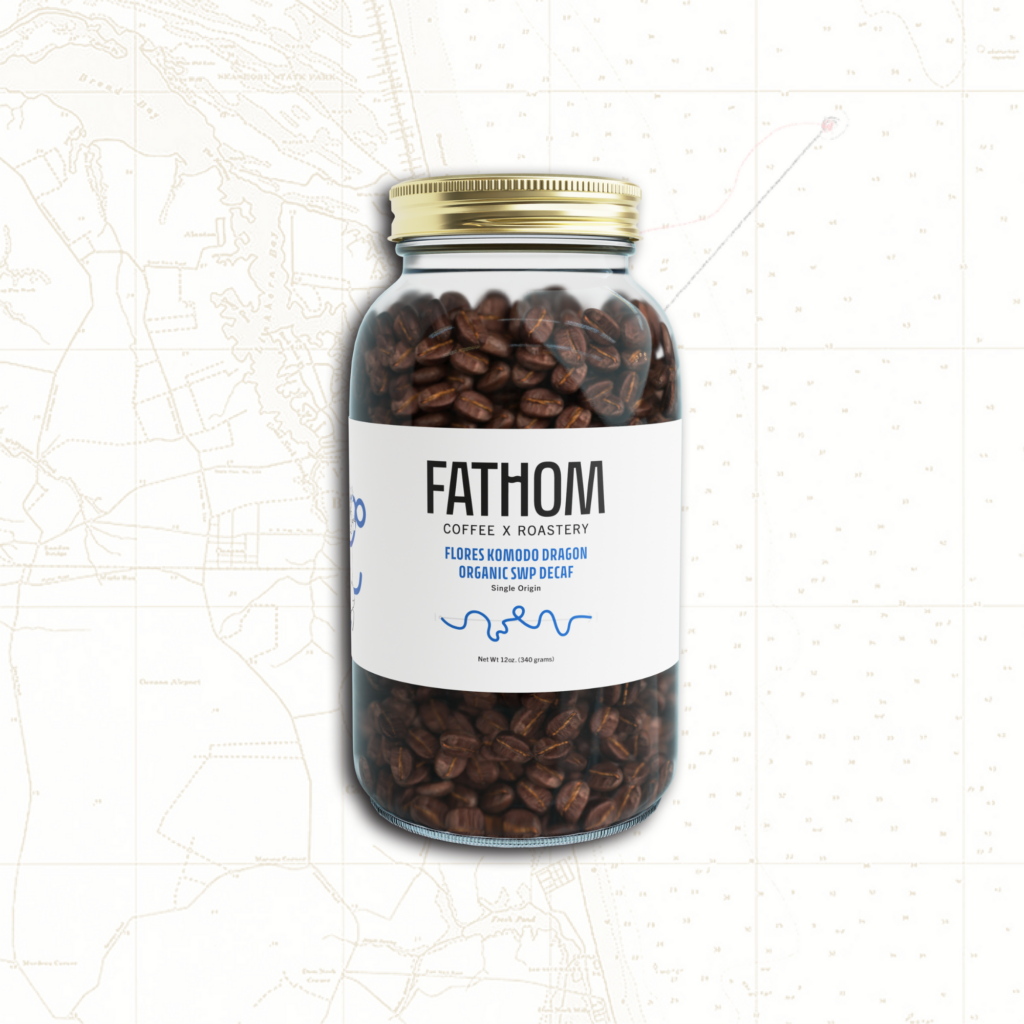
From source to sip
The story behind your next cup.
On the Indonesian island of Flores, the Bajawa highlands sit ringed by volcanoes. The same Komodo dragons that prowl the neighboring islands lend their name to this organic coffee, grown on slopes fed by ash from peaks like Inerie and Ebulobo. This is its decaffeinated counterpart, with the heavy body and spice intact.
Flores stretches across the eastern arc of Indonesia, and its coffee comes from Bajawa, an upland plateau in the Ngada regency. Smallholder farmers tend their plots in fertile volcanic soil, working without synthetic fertilizer or chemical pesticides, which is how the coffee earns its organic standing. The terrain is the kind of high-altitude ground that slows cherry maturation and concentrates the sugars that give Indonesian arabica its weight.
Read the full story
The Coffee Story
The SourceThe Volcanic Plateau of Ngada
Flores stretches across the eastern arc of Indonesia, and its coffee comes from Bajawa, an upland plateau in the Ngada regency. Smallholder farmers tend their plots in fertile volcanic soil, working without synthetic fertilizer or chemical pesticides, which is how the coffee earns its organic standing. The terrain is the kind of high-altitude ground that slows cherry maturation and concentrates the sugars that give Indonesian arabica its weight.
The varieties here read like a record of Indonesian coffee history: Typica from the original colonial-era plantings, alongside Catimor and Timor Hybrid lines bred for resilience in the tropics. Farmer groups pool their resources to process the harvest together, a cooperative rhythm that has long defined coffee life on the island.
The CraftWet-Hulled, Then Gently Decaffeinated
Bajawa coffee is wet-hulled, a method Indonesians call giling basah. Producers partially dry the beans before stripping the parchment layer, which gives the green coffee its signature blue-green cast and pushes the cup toward earthy, low-acid depth. You can read more about how wet and washed processing shape flavor, but the short version is that this technique is why Indonesian coffee tastes the way it does: round, savory, and unmistakable.
Decaffeination happens through the Swiss Water Process, which uses no chemicals at all. The green coffee is hydrated, then circulated in Green Coffee Extract, a caffeine-free solution that draws caffeine out through osmosis while the flavor compounds stay locked in the bean. The result clears 99.9 percent of the caffeine. We finish it at a City+ roast, deep enough to bring out the spice without scorching the body.
The CupSpice Without the Buzz
The cup opens heavy and smooth, carrying molasses sweetness over a base of dark chocolate. Warm spice follows, coriander and a flicker of ginger that nod to the savory, herbal side of Indonesian coffee. Acidity stays low, the finish stays clean, and nothing about it reads as decaf.
This is an evening coffee that earns its place after dinner or late in the afternoon, when you want the ritual and the flavor but not the night spent staring at the ceiling.