From source to sip
The story behind your next cup.
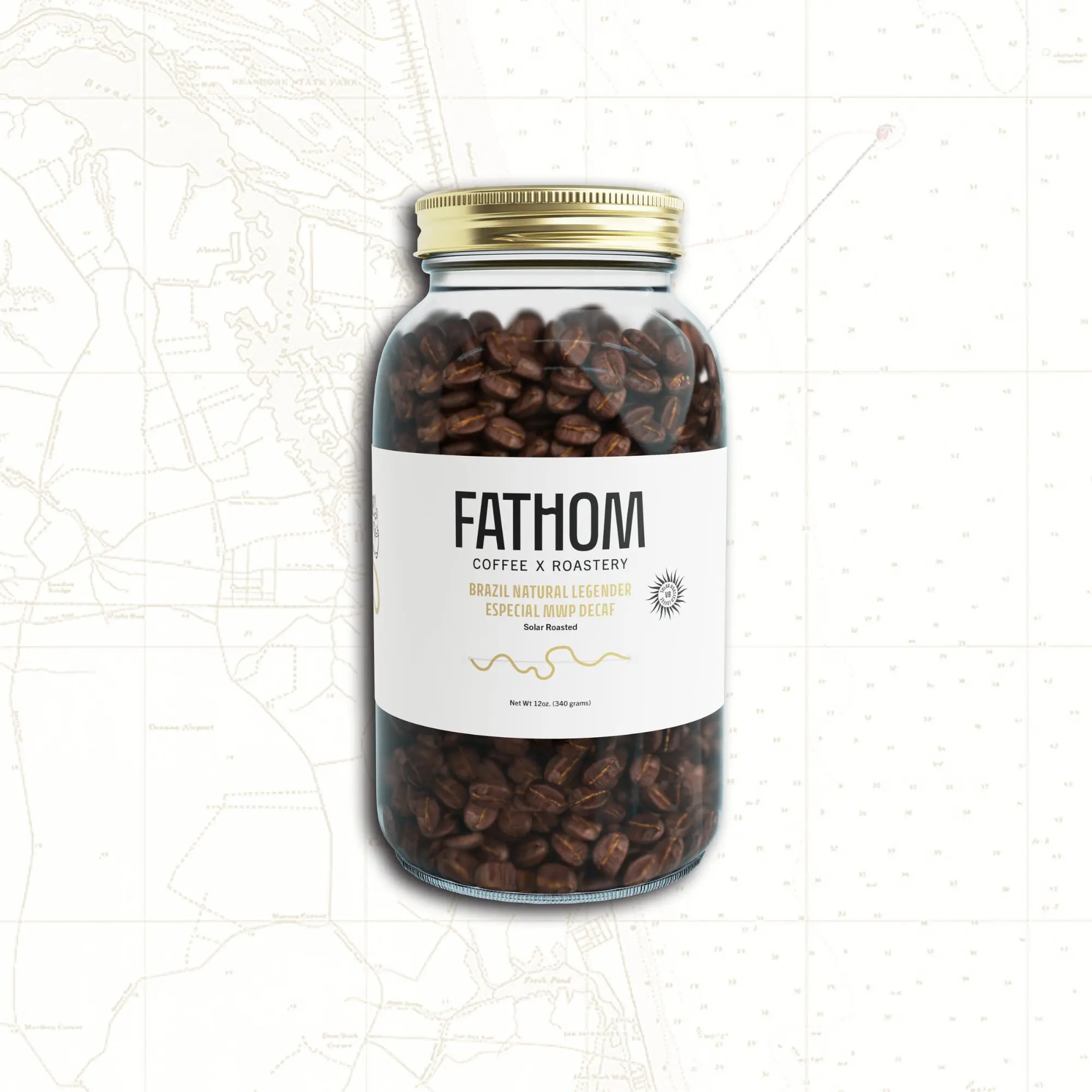
In the hill country of southern Minas Gerais, family farms called sitios cling to slopes around the towns of Machado, Poco Fundo, and Campestre. These are not the sprawling estates most people picture when they think of Brazil. They are small, hand-tended plots, and this decaf comes from a group of them.
Minas Gerais is the engine of Brazilian coffee, responsible for more than a third of a crop that itself accounts for roughly a third of all the coffee grown on earth. Most of that volume comes from large mechanized plantations. This coffee takes a quieter route. It is sourced through Legender Especial, a buying group founded in 2012 that works directly with smallholders across the micro-regions of Machado, Poco Fundo, and Campestre, families who run their sitios with the kind of attention that volume farming rarely allows.
Read the full story
The Coffee Story
The SourceSmall Farms in Brazil's Coffee Heartland
Minas Gerais is the engine of Brazilian coffee, responsible for more than a third of a crop that itself accounts for roughly a third of all the coffee grown on earth. Most of that volume comes from large mechanized plantations. This coffee takes a quieter route. It is sourced through Legender Especial, a buying group founded in 2012 that works directly with smallholders across the micro-regions of Machado, Poco Fundo, and Campestre, families who run their sitios with the kind of attention that volume farming rarely allows.
The farms sit around 1,100 meters, a moderate elevation that lets cherries ripen at a steady, even pace and build sugar without rushing. Growers here favor Arara, Catuai, and Mundo Novo, varieties well suited to the region's terroir, and many keep shade trees and mixed plantings that benefit both the cup and the land. Every lot traces back to a named farm and a family that can describe exactly how it was grown and dried.
The CraftNatural Drying, Then Mountain Water Decaf
After the harvest, the cherries are dried whole on open patios under the Brazilian sun, the fruit left intact so its sweetness can settle into the bean. This is the natural process , and it is what gives Brazilian coffee its signature heft and chocolate depth. The result is a green coffee that already carries the round, sweet character this origin is known for, before a single drop of caffeine is removed.
The decaffeination happens at the Descamex facility in Veracruz, Mexico, using the Mountain Water Process. Glacial water from Pico de Orizaba, Mexico's highest peak, draws the caffeine out while the coffee's own flavor compounds are recirculated back into the beans, so the chocolate and caramel survive the journey. No solvents, just water, down to roughly 99.9 percent caffeine-free. We finish it at a City+ roast that keeps the sweetness forward and the body intact.
The CupSmooth, Sweet, and Gentle
The first impression is milk chocolate, smooth and unhurried, followed by creamy caramel and a finish of brown sugar with a soft toasted-nut edge. Acidity stays low and the body runs full, so the cup feels substantial rather than thin, which is the trap many decafs fall into.
Because it is caffeine-free, this one belongs to the late afternoon and the evening cup, the pour you reach for when you want the comfort of coffee without the clock working against you. It is forgiving across methods and rewards a relaxed brew.