From source to sip
The story behind your next cup.
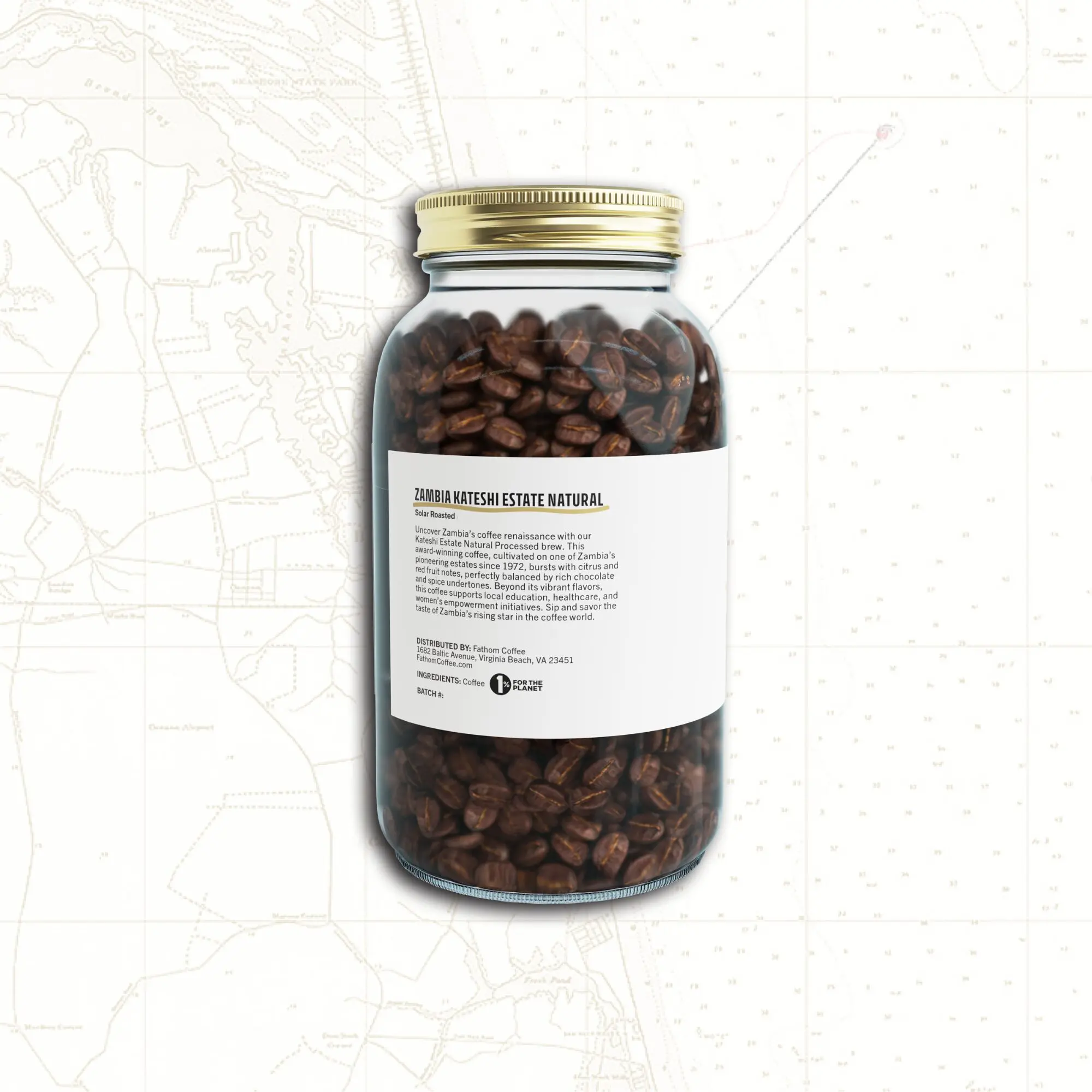
Northern Zambia rarely makes the map of great coffee origins, which is exactly why this cup feels like a discovery. Near the village of Kateshi, where the highlands climb toward the Mafinga Hills, an estate founded in 1972 has spent decades proving what this corner of Africa can do. We selected this natural-processed lot because it carries that story in every sip.
Kateshi Estate was established in 1972 as one of Zambia's first coffee farms, and for years its wet mill served as the central processing hub for the entire north. Most of the country's specialty potential runs through the Northern Province, where proximity to the equator pairs with serious elevation. The Mafinga Hills mark the highest ground in Zambia at 2,300 meters, and Kateshi's slopes sit around 1,300 meters, high enough to slow cherry maturation and concentrate sugars. You can taste the effect in the altitude : dense beans with a cleaner, more layered sweetness.
Read the full story
The Coffee Story
The SourceAn Estate That Built a Region
Kateshi Estate was established in 1972 as one of Zambia's first coffee farms, and for years its wet mill served as the central processing hub for the entire north. Most of the country's specialty potential runs through the Northern Province, where proximity to the equator pairs with serious elevation. The Mafinga Hills mark the highest ground in Zambia at 2,300 meters, and Kateshi's slopes sit around 1,300 meters, high enough to slow cherry maturation and concentrate sugars. You can taste the effect in the altitude : dense beans with a cleaner, more layered sweetness.
The estate's reach goes well beyond coffee. It supplies daily safe drinking water to more than 20,000 neighbors, supports three schools serving over 1,500 students, and runs the only health clinic within a 30-kilometer radius. Kateshi is also the first estate in Zambia to put women behind the wheel of tractors, graders, and bulldozers, reshaping who gets to do skilled work in the region's farms. After Olam's 2012 investment in the northern estates, the rejuvenation here helped pull Zambian coffee back onto the specialty stage.
The CraftNatural Drying on Raised Beds
This lot is fully natural, meaning the cherries dry whole with the fruit intact rather than being washed clean before drying. Pickers select for ripeness, the cherries float to remove underdeveloped fruit, and the lot rests on raised beds for three to four weeks of slow, even drying. That extended fruit contact is what builds the deep berry sweetness and winey character a natural delivers. If you want the contrast between this style and a cleaner cup, our guide to natural and washed processing lays it out.
We roast to City+ in small batches, stopping just past first crack to keep the fruit forward and the sugars caramelized without scorching the brighter notes. The goal is balance: enough development to round out the body, restrained enough to let the red fruit and floral lift stay vivid.
The CupFruit Forward, Chocolate Deep
The aroma opens with sweet citrus and red fruit. The first sips bring juicy blueberry and red berry up front, lifted by a gentle, winey acidity that keeps the cup lively rather than sharp. Underneath runs a steady current of chocolate and brown sugar that gives the brew real weight and a rounded finish.
As it cools, a soft floral sweetness threads through, and a whisper of warm spice lingers in the aftertaste. It reads as both exciting and comforting, the kind of cup that rewards a slow morning.