From source to sip
The story behind your next cup.
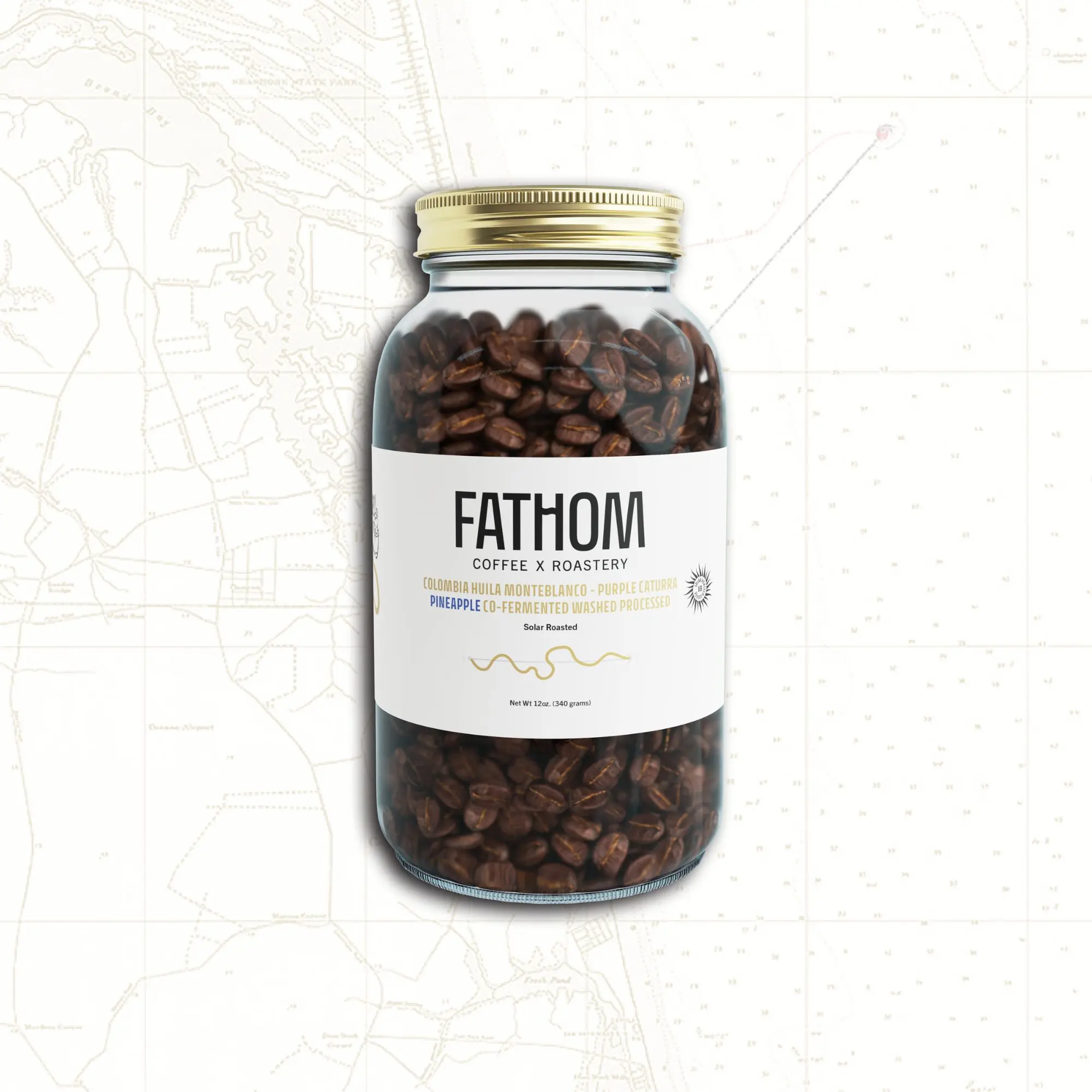
High on a hillside in Huila's Vereda La Tocora, above the town of Acevedo, Finca Monteblanco grows a coffee that ripens to deep purple. Rodrigo Sanchez Valencia turned that rare cherry into one of Colombia's most talked-about experimental lots. We selected this pineapple co-fermented washed for the roastery because it tastes like fresh fruit, not fermentation.
Colombia is the world's third largest coffee producer, and Huila has become its specialty heartland. Centered on the city of Pitalito, the region's farms are mostly smallholder owned, and over the past decade growers here have worked to reveal the full character of their terroir. Finca Monteblanco sits on roughly 18 hectares in Vereda La Tocora, with the wet mill and drying beds at the top of the slope and coffee planted below. The farm has been in the Sanchez family since Rodrigo's grandfather, and today Rodrigo Sanchez Valencia manages it as both a working farm and a processing laboratory.
Read the full story
The Coffee Story
The SourceA Family Farm on the Crest of a Hill
Colombia is the world's third largest coffee producer, and Huila has become its specialty heartland. Centered on the city of Pitalito, the region's farms are mostly smallholder owned, and over the past decade growers here have worked to reveal the full character of their terroir. Finca Monteblanco sits on roughly 18 hectares in Vereda La Tocora, with the wet mill and drying beds at the top of the slope and coffee planted below. The farm has been in the Sanchez family since Rodrigo's grandfather, and today Rodrigo Sanchez Valencia manages it as both a working farm and a processing laboratory.
The cool, high altitude here matters. Slow ripening at these elevations builds the dense, sugar-rich cherries that experimental fermentation depends on. Purple Caturra began as a natural mutation Rodrigo noticed among the farm's heritage plantings, a Caturra whose cherries deepen to violet at peak ripeness. He propagated it, studied how it cupped, and built a reputation that now sends Monteblanco microlots to competition tables and cafe shelves around the world.
The CraftFermentation Treated as Science
Rodrigo prefers the term co-fermented over infused, because nothing artificial is added. The work starts with a mother culture of lactobacillus and saccharomyces cerevisiae drawn from the farm's own cherries. Fresh pineapple and panela sugar feed that culture for about 190 hours while pH and Brix are tracked continuously, so the microbes are thriving before they ever meet the coffee. When ripe Purple Caturra arrives, the cherries are checked for sugar content, pulped, and moved into the tank for roughly 150 more hours under strict limits, at least 6 Brix and a pH above 4.0. Drying follows in two stages, two to three days of direct sun then 15 to 18 days under shade, down to a stable 10 to 11 percent moisture. Compare this control with traditional washed and natural methods and you can hear how deliberate it is.
We roast to City+ at our solar-powered Virginia Beach roastery, leaning on a slightly longer development to fold the tropical fruit into the coffee's natural nuttiness and creamy body. The goal is integration, not spectacle, sweetness and clarity rather than a sharp ferment edge.
The CupRipe Fruit, Not Fermented Fruit
The first impression is strikingly clean, ripe pineapple sweetness rather than anything boozy or over-fermented. That opens into a buttery mouthfeel and pronounced caramel, with a clarity that speaks to both the careful processing and a patient roast. As the cup cools, quieter layers surface, a thread of citrus brightness, sweet pastry, and a tropical finish that lingers without turning heavy. It is an approachable way to taste what modern fermentation can do.